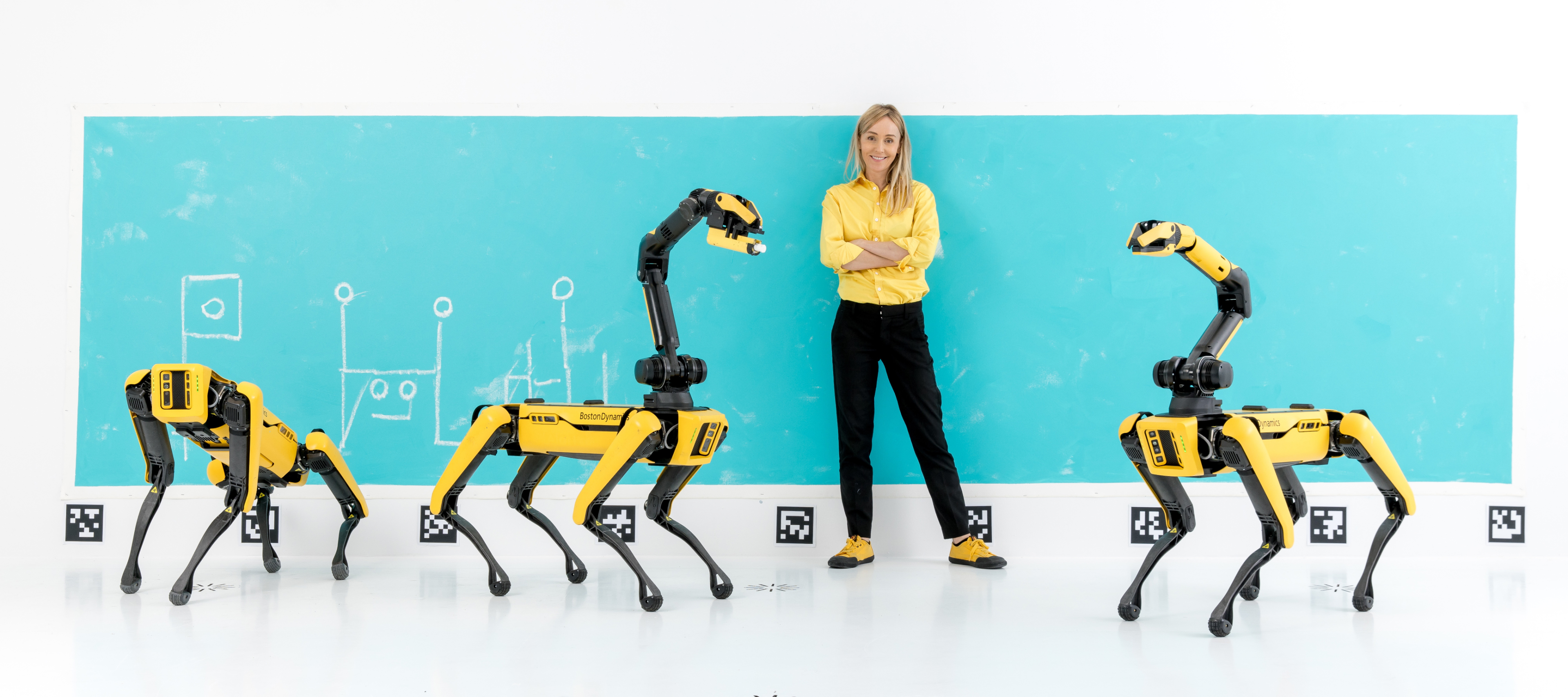
Agnieszka Pilat with her robotic installation Heterobota at NGV Triennial

Agnieszka Pilat on Heterobota for NGV Triennial.

Commissioned for NGV Triennial, Agnieszka Pilat’s robotic, AI-enabled installation blurs the line between art and technology.  


26 February 2024

From classic painter to “machine chaser”


Despite her futuristic work – which seems to be worlds away from the traditional oil paintings that dominated galleries centuries ago – Agnieszka was actually trained as a classic portrait painter.


For the self-described “machine chaser”, the transition from portraits to robots was an intuitive one. “When you think about portraiture, it really reflects power in society,” she says. “So when I moved to Silicon Valley, it occurred to me that power right now is with the machine, is with technology.”


Her earlier portrayals of machines focused on vintage objects. This included an oil painting of an old-school fire alarm bell for Paul Stein – the developer behind AirBnB's head office in San Francisco.

“…power right now is with the machine, is with technology,” says Agnieszka.

“When I transferred to painting portraits of new machines, I changed my colour palette, I changed my approach, I thought of them as children, as young, youthful,” she says.


As Agnieszka’s projects grew more curious and whimsical, it was clear that technology was more than just her muse – it started to become an active part of her work.


The age of the machine


The Polish American artist says she feels optimistic about what technology can do for art. Although Heterobota represents “the age of the machine”, it takes a playful and curious approach, reiterating “the best features of humans”.


At first glance, Bunny Spot, Basia Spot and Omuzana Spot might seem similar, but through a mixture of machine learning, AI and the artist’s own intervention, they actually have their own unique identities and traits.


Basia, for example, has been trained to be creative and paint. The robot was originally designed for industrial purposes – to work in dangerous environments such as power stations and oil rigs – but Agnieszka saw the creative potential in her.


“[Heterobota] is a collaboration between me, a human, and a machine,” Agnieszka says.

It's also an apt work for NGV Triennial, perfectly encapsulating the theme of ‘magic’.


“Someone said that technology that we can't understand appears as magic,” Agnieszka says. “My team understands robotics quite well. But the technology is so sophisticated, that it seems like magic.”


For viewers watching the four-legged creatures move and play in unexpected and seemingly unscripted ways, the installation is truly spellbinding.


Augmenting reality


As technology sparks new forms of art, it’s also generating questions about creativity and authorship. For example, are the paintings in the installation the work of Bunny Spot, Basia Spot and Omuzana Spot, or are they purely the work of Agnieszka? Will a future race of robots look back at these paintings and see them as ancient relics of their ancestors? As humans grapple with the phenomenon of automated creativity, Heterobota inspires challenging philosophical conversations.


While some have concerns about the anti-social effects of technology and AI, Agnieszka takes a much more positive view.

“…the technology is so sophisticated, that it seems like magic,” says Agnieszka.

Discover more from the world of Mercedes-Benz.