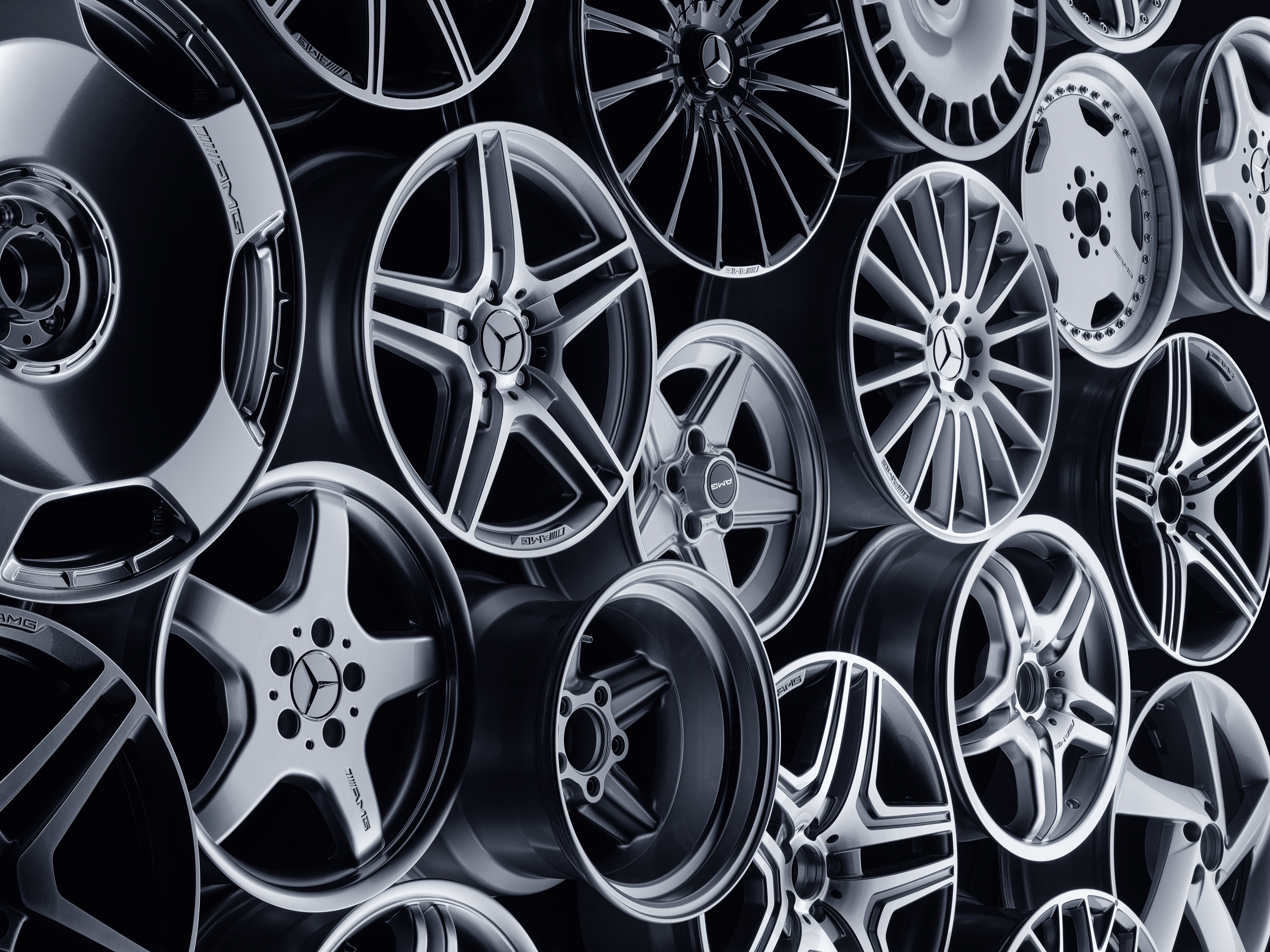
;Resize=(828,828) "Mercedes-Benz car whels.")
Since the invention of the automobile, Mercedes-Benz has been at the forefront of car design, including one of the most fundamental components: the wheel.
More than just functional, wheels can dramatically affect a vehicle’s overall style and presence on the road. Here, we reflect on the history of the wheel at Mercedes-Benz and highlight some of the most innovative and artistic designs.
The birth of an icon
Carl Benz's patented 1886 motor car, the Benz Patent-Motorwagen, ran atop wheels that were a testament to the era's craftsmanship.
Fine metal wire spokes, carefully tensioned and arranged, supported the weight of the vehicle while providing a surprisingly smooth ride for this early era. Reminiscent of bicycle wheels, this revolutionary wheel design was a bridge between the horse-drawn carriages of the past and the motorised future.
Wooden spokes for racing glory
A new chapter in wheel design arrived with the new century. At the Nice Week race meet in 1901, Baron Henri de Rothschild’s Mercedes 35 HP racing car – widely recognised as the world's first modern automobile – showcased wheels that each bore 12 wooden spokes.
Reminiscent of traditional carriage wheels, this design provided the combination of strength and flexibility needed for the rough roads and high speeds of early automobile racing. The victories in Nice not only established Mercedes-Benz as a force to be reckoned with in motorsport, but also solidified the brand’s reputation for superior design.
The rise of the sheet-steel disc wheel
The 1930s brought significant changes to wheel design, as seen in the pioneering Mercedes-Benz 170 saloon introduced in 1931. This model featured sheet-steel disc wheels, marking a shift towards more modern manufacturing techniques.
The design offered several advantages: it was easier to produce in large quantities, provided better protection for the brake components and improved aerodynamics. Sheet-steel disc wheels would become a staple of automobile design for many decades, evolving alongside the cars it supported.
Motorsport innovations: filigree wire wheels
While sheet-steel disc wheels were gaining popularity in production cars, the world of racing saw a resurgence of wire wheels in a more sophisticated form. The filigree wire wheels that became popular in Mercedes-Benz racing cars of the 1920s and 30s were often fitted with sheet steel or aluminium covers, combining incredible strength with lightweight construction and minimal air turbulence – all crucial factors in the quest for speed. The intricate patterns of the spokes were not just functional but also aesthetically pleasing, adding to the sleekness of these pure-bred racing machines.