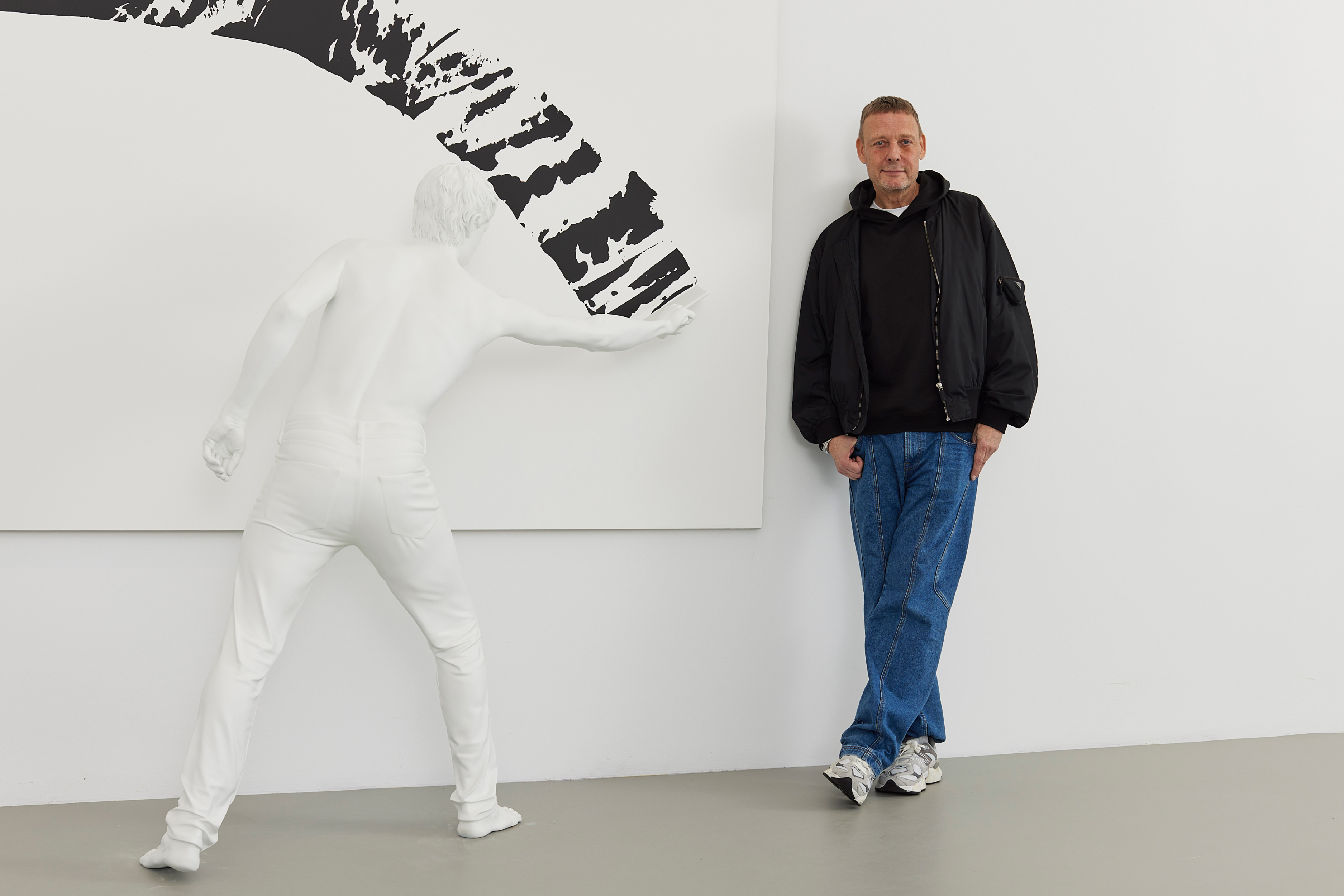
A nightclub might not be the most obvious place to go for creative inspiration – but for Scandinavian artists Michael Elmgreen and Ingar Dragset, a chance encounter at a club in Copenhagen led them to create an array of clever and ambitious works. A four-and-a-half-tonne swimming pool hanging outside Rockefeller Centre in New York; a fake Prada boutique on a quiet stretch of Texan desert; and an intriguing collection of sculptures currently on display at the National Gallery of Victoria’s NGV Triennial exhibition, of which Mercedes-Benz is the proud Principal Partner.


“We found that we shared a lot of the same world views and ideas. Not long after, we started doing performances together,” says Michael, recalling their 1994 meeting. Shortly after, they formed the art duo Elmgreen & Dragset and moved to Berlin, which has been their base since 1997.
 

The road less travelled


If Elmgreen & Dragset’s work doesn’t fit the stereotypical idea of framed art in a conventional gallery setting, it’s because they’re not from traditional art-school backgrounds.


“I actually started out writing poetry,” says Michael, but he quickly realised the market for verses written in his native Danish language was small.


“Almost no one bought these poetry collections,” he says. “So I started putting text on old IBM computer screens, where they morphed in front of your eyes.”


He approached a gallery about showing his poetic creations – and a month later, he took part in a show.


“Not many people from literature came, but people from the visual arts did. Soon after, I started getting invitations to group shows and exhibitions. And it became art.”


Embracing the unconventional


Michael’s collaborations with Ingar – who has a background in theatre – have always challenged assumptions about art and how it’s displayed.

“We were shocked that, no matter where we were in the world, the exhibition venues look more or less the same,” Michael says.

These clinical white spaces seemed so unfriendly; they wanted to engineer welcoming environments that enriched the viewer’s experience.


“So we started putting on a lot of exhibitions that challenged the white cube format,” he says.


One of their earliest projects involved covering gallery walls in 300 litres of white paint and then hosing down the space until it become a joyful, snowscape-like mess.


“Later on, we started doing exhibitions where we masked the white cube, made it look like something else: an abandoned swimming pool, a hospital room, a subway station… we essentially dressed these spaces up in drag.”


The pair may be a major art world success – and possibly the only artists to have an installation publicised by both The Simpsons and Beyoncé – but Michael says their work is “based on a lot of disappointments”. Acting as each other’s editors, they’ll reject and refine ideas until they’re both happy with the result. They also have a team of 14 people in their Berlin studio to help execute their work.

Exploring identities


At NGV Triennial, Elmgreen & Dragset’s sculptures examine the relationship between the human body and the spaces we occupy.


There’s The Painter, which depicts a man – formed from bronze and completely coated in white – mid-action, decorating a canvas with a strip of black paint.


“It's as close as we get to being painters,” says Michael. “We think the process of painting is far more interesting than the painting itself.”


What’s Left? features a highly realistic tightrope walker, fashioned from silicone, and suspended from the rope by one arm. “He's hanging there in mid-air, it's a moment frozen in time: you don't know if he will make it back up onto the wire, or if he'll fall down.”


Created specifically for the NGV Triennial, The Examiner depicts a polished stainless-steel figure leaning over a balcony with his camera: “When you look at him, he looks right back at you,” says Michael.


Finally, a pair of jeans and white Calvin Klein underwear are strewn casually across the gallery floor, an early work entitled Powerless Structures, Fig. 91.


“Many of our sculptures deal with masculinity, particularly forms of masculinity that break with more traditional representations,” Michael explains. As well as questioning traditional gender expectations, their work has touched on sexuality since the start: their early performances showcased LGBTQIA+ identities when they felt representation was sorely missing in the art world.
 

“We think the process of painting is far more interesting than the painting itself.”

Art as memory


The four sculptures, which will become part of the NGV’s permanent collection, embody the Triennial’s theme of ‘memory’. In an age where the physical is increasingly being replaced by the digital, Elmgreen & Dragset recall our physical bodies and give them a sense of permanence.


The tightrope walker in What’s Left? is imbued with nostalgia, paying tribute to the duo’s old friends from the ’90s, who’d juggle, spit fire and perform acrobatics. “They are all doing different things now, but maybe one day they will make it up on the wire again,” says Michael.


In addition to their appearance at the Triennial, the artists’ work is showcased around the world. At the Centre Pompidou-Metz is Bonne Chance, the duo’s the first solo exhibition in a French institution, followed by another solo exhibit at Seoul’s Amorepacific Museum set to open this fall. And though every piece of art is unique, their use of humour is consistent, inclusive and playful.


“Even though Ingar and I deal in serious matters”, Michael says, “we find that absurd humour is often a perfect tool for dealing with these more existential subjects.


“You can look at our work and laugh at it, but then maybe later, you might think about it in a different way… to us, leaving space open for viewers to come away with their own interpretations, to perhaps see things in a new way, is more important than lecturing them about what is right and what is wrong.”

Discover more from the world of Mercedes-Benz.