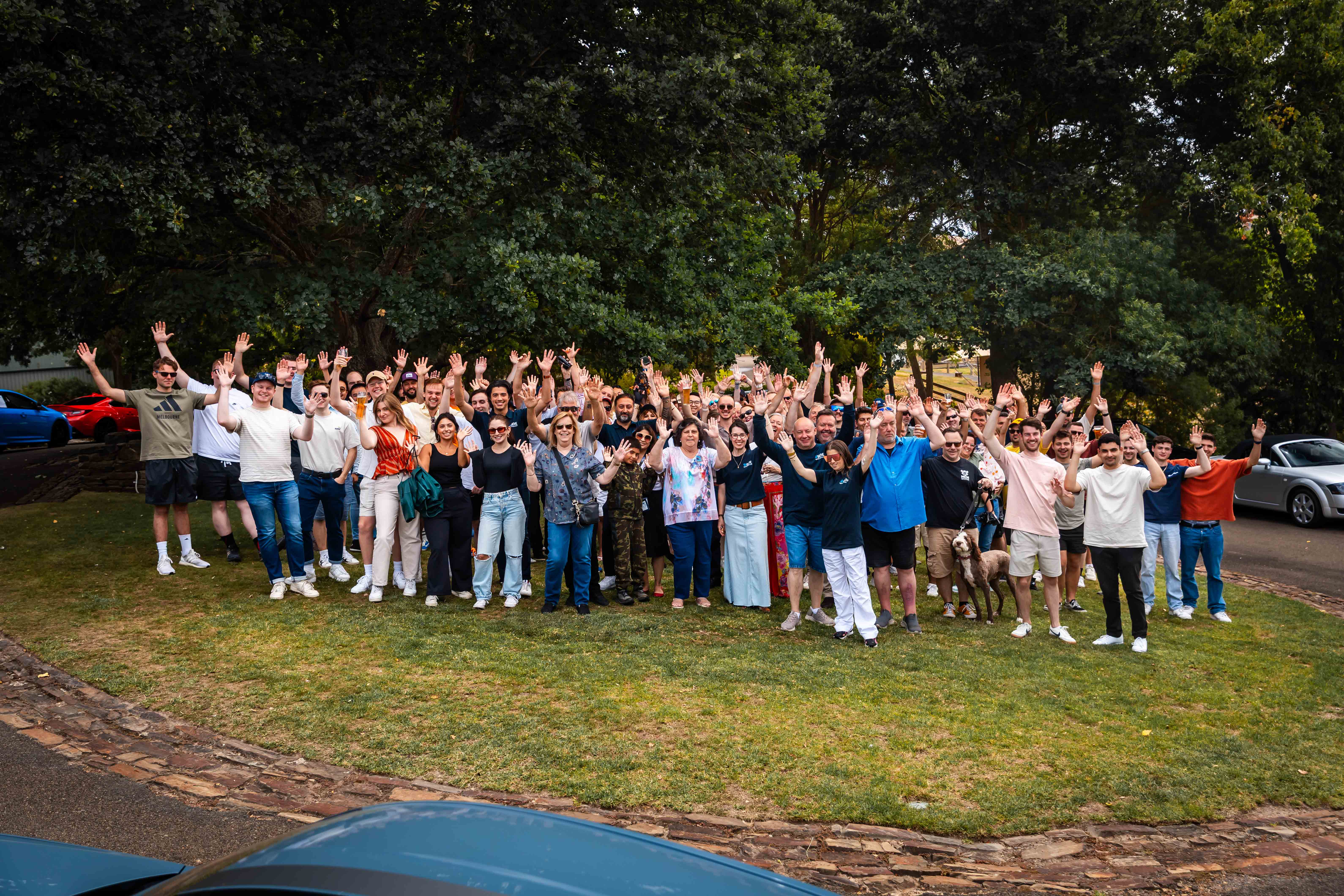
;Resize=(828,827) "A large group of people with their hands in the air after a drive that advances mental health.")
Picture this: it’s a Sunday morning, the roads are quiet, and the sun is painting the sky in golden hues. A leisurely early morning drive takes you on a meandering route, and as you follow the winding roads, there’s a sense of possibility – a feeling that change might be just around the corner.
For many people, driving feels restorative. It offers a moment of calm amid our busy schedules, a chance to clear our minds. For Adam Davis, founder of Australian charity Drive Against Depression (DAD), it’s more than that. A long drive with a good friend sparked a pivotal conversation that finally brought years of silently struggling with depression into the open.
“When Adam came home from that drive, there was this glimmer of hope I hadn’t seen in a long time,” recalls his wife Sarah Davis, DAD co-founder and managing director. “He’d been struggling with severe depression… but in that car, on roads he loved, he finally found space to talk. From that small moment, things began to shift.”
Soon, others started to join. Two people turned into four, then 20, and people started asking: “When’s the next one? I’ve got a friend who could really use this.” DAD became a registered charity hosting regular community driving events across Australia, built on the belief that driving together creates opportunities for connection and fosters open conversations about mental health.
“Our drives are a reminder that good days are possible,” says Sarah. “They create a safe space where people feel comfortable to drop the mask and not be okay… it helps people reconnect with hobbies, with themselves and, crucially, with community.”
World Mental Health Day in October is a reminder of why caring for our mental wellbeing matters.
A time for awareness and connection
“We’ve come a long way in how we view mental health, but stigma still exists, both around speaking up and seeking support,” says Emma Greeney, director of policy and advocacy at Mental Health Australia.
She describes World Mental Health Day as a vital opportunity to have positive, open conversations, and “to remind people that not only do they have people around them they can reach out to, but that as a member of a community… they can also step up and offer support to those around them”.
“We can sometimes feel really disempowered when talking about mental health and may feel paralysed not knowing what will support somebody,” says Emma.
“One of the most powerful things we can do in our communities is step forward and offer that helping hand. The simple act of being receptive to someone and agreeing to sit with them and listen and hear what they’re saying does wonders for people that might be in a dark place.”
Sarah has seen this play out at DAD events. “Cars and driving are the perfect door opener,” she says. “People start by talking about their cars – why they love them, hate them, the story behind them – and that creates a natural connection.
“Once they feel safe, deeper conversations happen. Someone hears a story that sounds a bit like their own and thinks, ‘Maybe I’ll share too.’”
For some, these drives can be life changing. “While every person’s story is different, the common thread is that you are not alone in having struggled,” Sarah says.
“The power in feeling that is enormous! We’ve seen it leading to people taking real steps like talking to their GP or getting a mental health plan. Parents and adult kids even use our events to reconnect. The growth in conversations, connection and willingness to seek support is incredibly humbling to witness.”