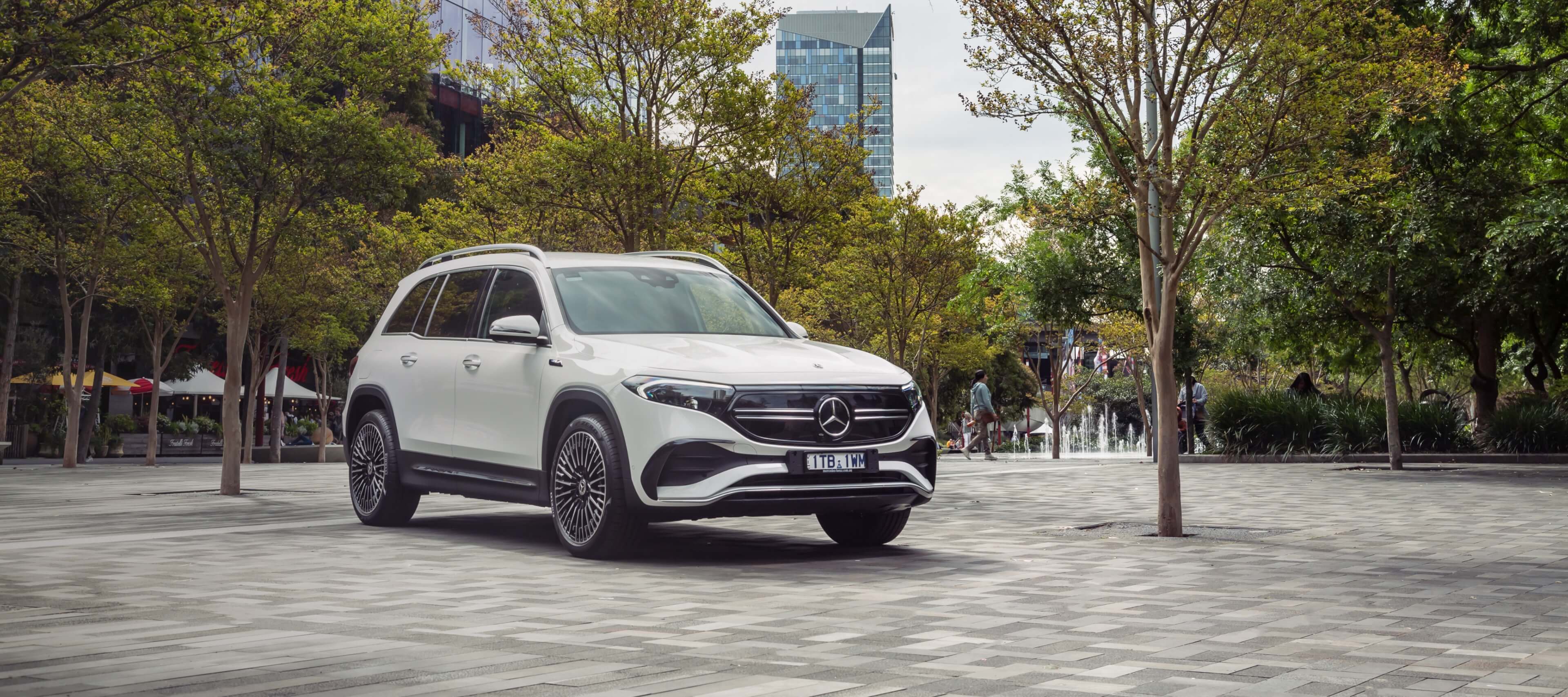
;Resize=(828,827) "EQB 250 SUV")
The arrival of the practical and highly evolved all new EQB from Mercedes-EQ demonstrates that electric vehicles (EV) can be viable for everyone. This specific model makes an undeniable case for the innovation driving Mercedes-Benz towards the point where every model in its range will have an all-electric variant by 2025.
After a first drive of the EQB, it feels like an enthralling new automotive breed. Like the EQA before it, the all new EQB isn’t a repackaging exercise to retro-fit a fossil-fuelled model with an electrical system. From the moment Mercedes-Benz conceptualised the innovative idea of a compact-sized SUV with seating for up to seven, a discrete all-electric variant was non-negotiable.
The outcome is a SUV that’s refreshingly untarred by the oddball design, packaging quirks and driving range compromises that have been the hallmarks of early EV efforts from a range of brands.
A versatile beast
The key model we’re testing is an EQB 250, fitted with an optional third row that brings seating capacity to a maximum of seven occupants. As you get into the vehicle, an encouraging first impression is that you neither step up or down. The seating height is just right; a bonus both for parents who lift young children into booster seats, and older occupants whose agility might not be all it once was.
Crucially, the EQB is a versatile beast. The cabin can be arranged in dozens of configurations from seating seven occupants to carting wardrobes or bikes, or anything in between. The optional third row of seats arise from the flat boot floor to form seating suited to two smaller bodies, who nonetheless have a window to look out of, cupholders, a storage shelf and an armrest. Second row passengers also get door and seat-back pockets, adjustable seat backs, and plenty of space for bigger bodies courtesy of the sliding fore-aft seat cushion available with the optional third row.