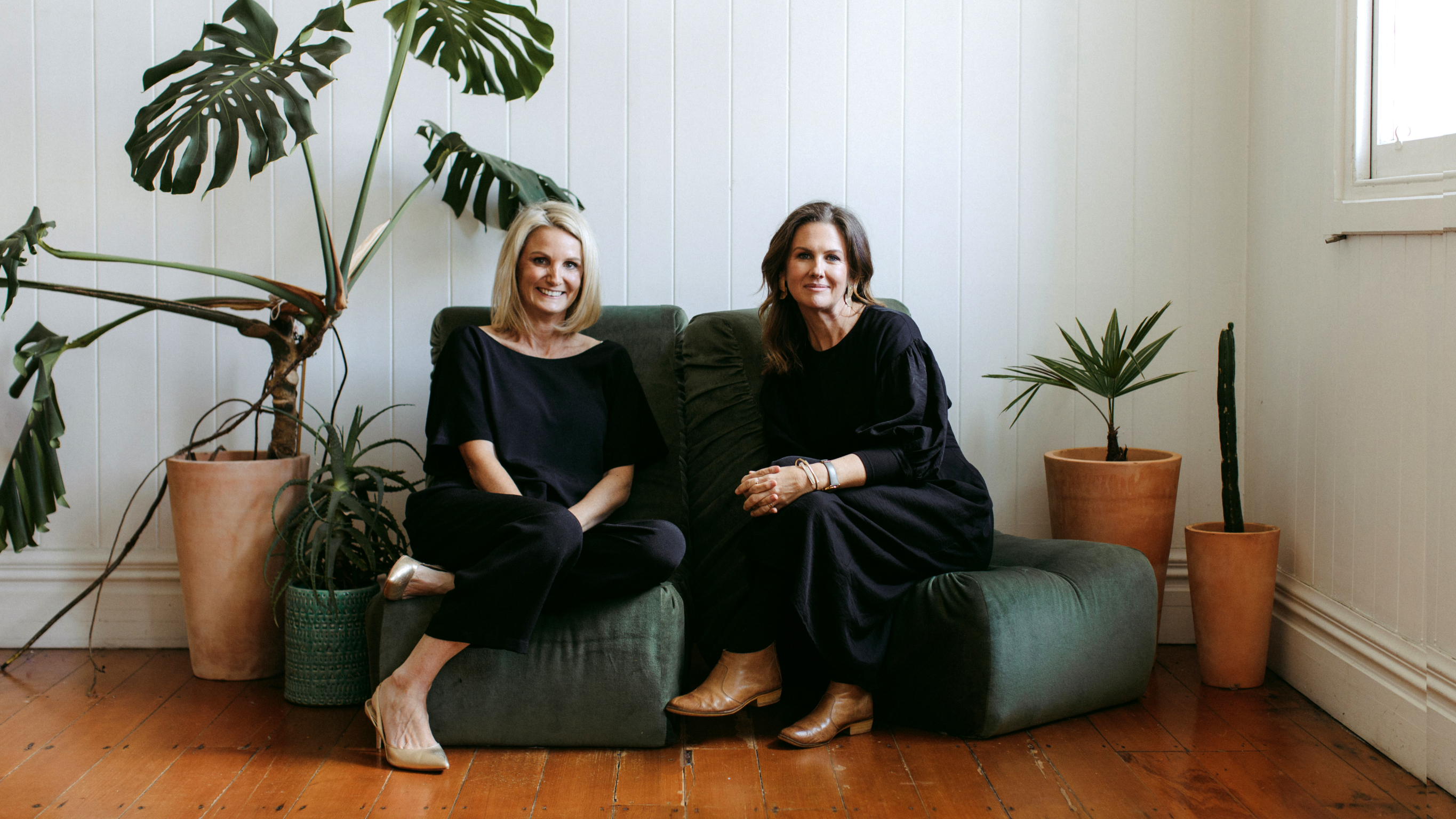
Bec Percasky (left) and Kate Bezar are on a mission to reduce the impact of the e-commerce boom with The Better Packaging Co. Image: Supplied.
;Resize=(828,828) "Rebecca Percasky and Kate Bezar")
The duo making online shopping more sustainable.
E-commerce is thriving, and thanks to one business creating sustainable packaging solutions, the planet isn’t paying as high a price.
16 December 2021
Add. To. Cart. Three little words that have come to define the way we shop. But the staggering surge in online retail has come with some quite significant costs to the planet; namely the avalanche of packaging waste that protects our purchases on their journey from A to B.
Bec Percasky and Kate Bezar are two New Zealand friends who are on a mission to reduce the environmental impact of the e-commerce boom with sleek packaging solutions made from sustainable materials.
The pair first crossed paths about 10 years ago while living on Waiheke Island, a 45-minute ferry ride from Auckland. Bec was working as the chief operations officer for shipping and tracking tech company Starshipit, and Kate was freelancing in branding and communications. Both shared a deep aversion to the sheer volume of packaging waste that was being generated by the surge in online shopping.
“I started in an industry that was just at the beginning of exploding,” reflects Bec of her four-and-a-half-year tenure at Starshipit. “It dawns on you how much additional packaging waste there is with that growth … everything is in an extra bag, and bubble wrap, and courier’s satchel or box.”
Solving e-commerce’s packaging crisis
The problem loomed large in their minds until 2017, when Bec stumbled upon an innovative zero-waste material created from calcium carbonate – building industry off-cuts – and recycled resin. Inspired by its potential, she approached Kate suggesting they investigate further. “The potential to reduce the amount of packaging waste in the world and to provide more sustainable packaging solutions – [Bec] knew, based on my history and knowing me as a person, that I was going to get super excited about that,” says Kate.
The pair began working on designs for eco-packaging satchels using the off-cut material. “One thing led to another”, explains Bec, and, in 2018, The Better Packaging Co. officially launched.
The company’s unique blend of eco credentials and slick aesthetics has since attracted a large cohort of like-minded businesses. From fashion to beauty, homewares and children’s essentials, The Better Packaging o. gives sustainably minded businesses the opportunity to implement their ethos all the way into the customer’s hands.
‘A Real Dirt Bag’
Better Packaging Co. still uses the calcium carbonate component in its Øpack collection, which is waterproof, antibacterial and photodegradable (meaning it breaks down in sunlight). However, Bec and Kate knew they needed to investigate alternative materials that would be effective to sell at scale.
“We found a material that was being used to make rubbish bags and product bags, quite thin film, that was certified home compostable,” recalls Kate. “We could immediately see the appeal.”
The result? ‘A Real Dirt Bag’, a compostable mailing satchel rendered in a sleek matte black and designed to break down after use. “Bec and I are both lovers of great design,” says Kate. “We don’t think we need to compromise … we can make it aesthetically stunning and clever and beautiful, as well as sustainable.”
The Dirt Bag’s first production run sold out within two weeks, and the company has since sold more than 60 million bags, but Bec and Kate were also keen to develop a solution for consumers who don’t have access to home composting. ‘BCollected’ is a broad network of locations where people can drop off their used packaging to be picked up and delivered to a commercial composting facility. “We take product stewardship really seriously. All our products are designed according to the Ellen MacArthur Foundation circular economy model. We look at the four stages, and end-of-life is a big part of that.”
The rise of the conscious consumer
The last decade has heralded a rise in ‘conscious consumption’ – with consumers seeking more meaningful interactions with the brands they buy from, and making purchasing decisions based on how a product is made.
Kate and Bec have witnessed the influence of conscious-purchasing power first-hand. “We’ll quite often have a [brand] come to us [and] the number one complaint they’re getting [from customers] is around packaging. And that’s why they’re driven to speak to us – consumers are just pushing back on them,” says Bec. “We love hearing [it] because it shows the consumer voice does make a difference, and we all have the buying power to make change.”
Going global
Over the past three years, the Better Packaging Co. has grown in personnel and product offering, with around 20 employees spread across New Zealand, Australia and Argentina, and several new categories including labelling, garment bags and pallet wrapping.
Multiple international distribution centres ensure global access to the brand’s sustainable offering, reducing its carbon footprint in the process. “We’ve also used technology to automate as much of it as possible,” Bec says. “We’ve got a number of SaaS [software as a service] applications that all talk to each other magically behind the scenes, and that enables us to look after our customers 24/7.”
While the onset of COVID-19 in early 2020 stopped entire industries in their tracks, e-commerce surged to levels that were previously incomprehensible. Nearly two years into the pandemic, the need for sustainable shipping alternatives is greater than ever. “Our customers’ sales are going through the roof, and so our growth has gone pretty crazy too,” says Bec.
The pandemic has, of course, brought a unique set of operational and supply-chain challenges for the business. “There’s a lot of balls in the air that you traditionally wouldn’t be facing. When we go back to normal life, I think we’re all going to be like, ‘Oh, this is easy’,” Bec laughs.
Looking to the future
In their quest to transform the packaging industry, complacency isn’t an option. “We’re always saying, ‘what is that next best solution?’,” says Bec. Following a brainstorm session with the wider team last year, the company is now looking at ways to reduce ocean pollution. “We’ve just recently launched Pollastic, which is packaging made out of 100 per cent ocean-bound plastic pollution.”
Pollastic allows the company to work with frontline communities to collect plastic from beaches and riverways, where it can be converted into courier satchels, poly bags, ziplock bags and more. “We’ve got more innovation in the pipeline … We really believe that packaging can have a purpose. Not just a purpose to protect, but to make an impact with poverty and pollution.”
By Victoria Pearson